.jpeg)
Introduction
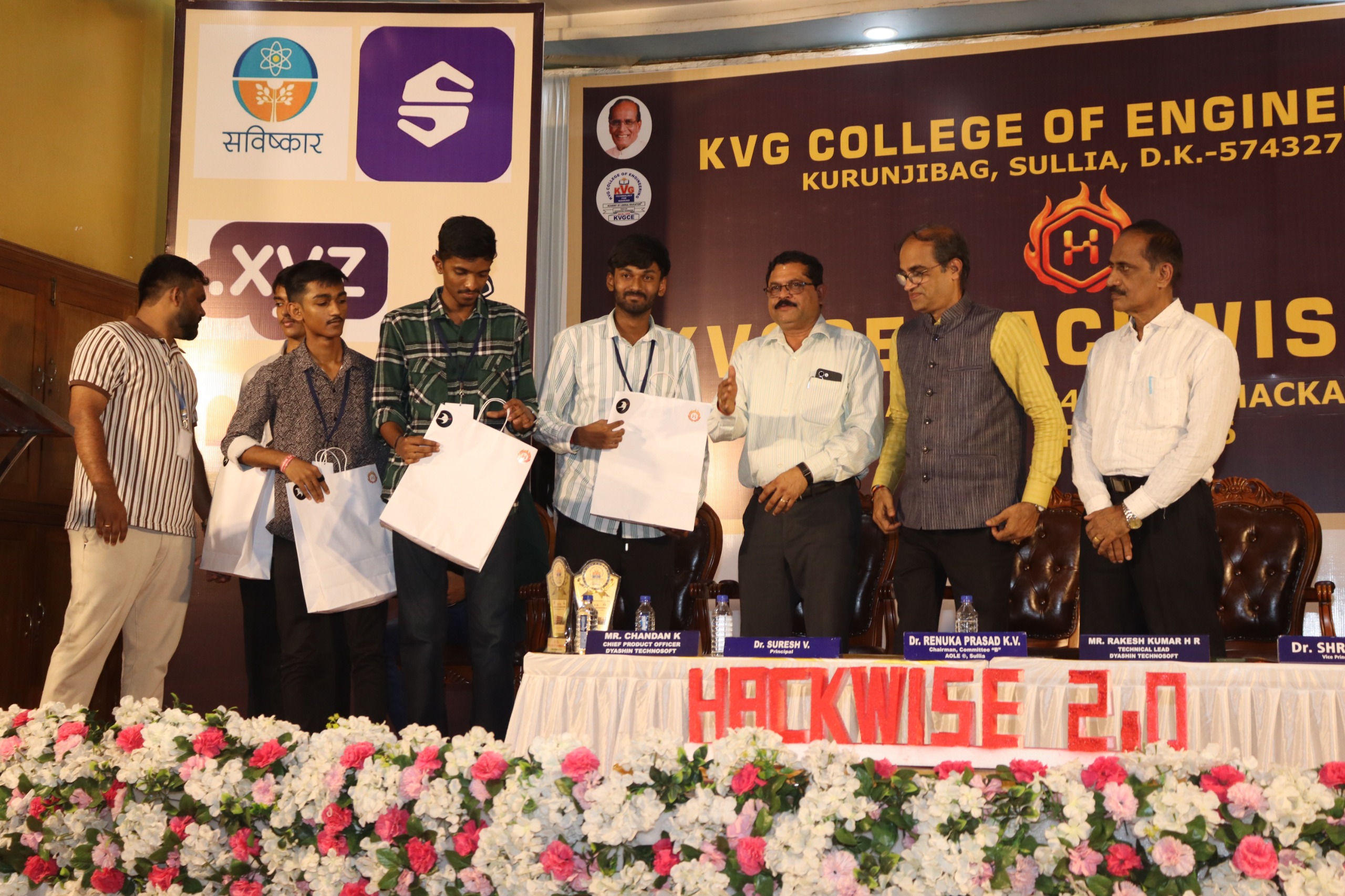
24 hours. One product. Hundreds of teams from across India. And us — first year students who had no business being that deep into a national SaaS hackathon. Yet there we were, at KVG College of Engineering, pulling through a sleepless night and walking away with 4th place at Hackwise 2.0.
Yet there we were, at KVG College of Engineering, Sullia, Karnataka, pulling through a sleepless night of building, debugging, and pitching — and walking away with 4th place at Hackwise 2.0, one of the most competitive student hackathons in the country.
This is that story.
What is Hackwise 2.0?
Hackwise 2.0 was a national level, 24-hour offline SaaS hackathon organized by Sphere Hive — the official tech and innovation community of KVG College of Engineering (KVGCE). The event concluded its final sprint on 4 and 5 April 2026, driven by industry experts from DSEdify, and challenged engineering students nationwide to ideate, build, and pitch functional software products from scratch.
The stakes were real. The prize pool stood at over ₹60,000 in cash rewards, combined with elite corporate career incentives:
- Winner — ₹40,000 cash prize + a direct Pre-Placement Offer (PPO) from Dyashin Technosoft
- First Runner-Up — ₹20,000 cash prize + a direct corporate internship offer
- Second Runner-Up — Direct internship opportunity + exclusive tech goodies
This was not a casual college event. It was a serious, high-pressure competition with real career outcomes on the line.
The Structure: Two Phases, No Shortcuts
Hackwise 2.0 was built to filter and challenge in two distinct stages.
Phase 1 — The Gauntlet (January 14 to February 28, 2026) The competition opened with an online evaluation phase where teams submitted comprehensive concept notes and pitch decks detailing their SaaS solutions, tech stacks, and Unique Selling Propositions. This phase was about proving your idea was worth building before you ever wrote a line of code. You had to think clearly, articulate sharply, and make a case for why your solution deserved a spot in the finals.
Getting through The Gauntlet was the first win. Many teams didn't make it past this stage.
Phase 2 — The Showdown (April 4 and 5, 2026) The survivors entered the live, 24-hour on-campus coding sprint at KVGCE. This was the real thing — teams built, tested, and fine-tuned their software products alongside assigned technical mentors. No shortcuts. No pre-built templates. Just your team, your laptop, and the clock ticking.
Technical support was powered by 3LC AI as the official technical partner, with DSEdify specialists providing active mentorship throughout the sprint.
Walking Into a Room Full of Final Year Students
There is a particular feeling that hits you when you walk into a national hackathon as a first year student and look around the room. Everyone else looks older, more experienced, more prepared. Their GitHub profiles probably have more commits than your age in years.
That feeling could have been paralyzing. We chose to treat it as fuel instead.
We reminded ourselves that we had made it through the same selection process as everyone else in that room. Our idea had been evaluated on the same criteria. We had earned our spot. The only thing left to do was build something worth remembering.
The Build: 24 Hours of Everything
A 24-hour hackathon is a unique kind of pressure cooker. The first few hours are exciting — ideas are flowing, everyone is energized, the product is taking shape. Then comes the middle stretch, somewhere around 3 or 4 in the morning, where exhaustion starts to creep in and things that seemed simple start breaking in unexpected ways.
That is where character is built.
We divided responsibilities, leaned into each other's strengths, communicated constantly, and kept going. When one of us hit a wall, another stepped up. When something broke, we debugged together. When the clock was running down, we made hard decisions about what to cut and what to keep — because a clean, functional product beats a bloated, broken one every single time.
By the time we reached the pitch, we had something we were genuinely proud of.
The Pitch and the Result
Pitching after 24 hours of no sleep is its own challenge. You have to switch from builder mode to storyteller mode — explain not just what you built, but why it matters, who it's for, and why your approach is better than the alternatives.
We gave it everything we had.
When the results were announced and we placed 4th at a national level — as first year students, competing against teams from across India including seniors and postgraduate students — the feeling was something I genuinely cannot fully put into words.
We didn't win the cash prize. We didn't get the PPO. But we walked out of that building having proven something to ourselves that no prize money can buy.
What Hackwise 2.0 Taught Me
Ship Something Real
In a hackathon, a working product always beats a perfect idea. We learned to prioritize function over polish and make decisions fast. That bias toward shipping is something I carry into every project now.
Sleep Deprivation is a Leadership Test
At 4 AM when everything feels broken and everyone is tired, leadership is not about having the best ideas. It's about keeping the team focused, calm, and moving forward. That night taught me more about team dynamics than any group project ever had.
First Year Is Not a Limitation
Age and year of study are just numbers. What matters in a hackathon — and in most real-world situations — is how clearly you think, how well your team communicates, and how much you care about what you're building. We proved that first year students can compete at the national level and belong there.
Every Competition Makes You Sharper
We placed 4th. Not 1st. And that gap between where we finished and where the top teams finished is information — it tells us exactly what to work on, what to build next, and how to come back stronger.
The Network Is as Valuable as the Result
Meeting students, mentors, and industry experts from DSEdify and 3LC AI at Hackwise 2.0 opened doors and conversations that a classroom never could. The people you meet at these events are often as valuable as the ranking you leave with.
To Every First Year Student Hesitating to Compete
I want to be direct with you: enter the hackathon.
Not when you feel ready. Not after your next semester. Not when you have more projects on your resume. Now. As you are. With the skills you currently have.
The worst case is that you learn something. The best case is that you surprise yourself — and everyone else in the room.
We were first year students at a national SaaS hackathon. We finished 4th. We will be back for more.
Thank You
To my team — every line of code, every late-night decision, every moment of this belongs to all of us equally. To Sphere Hive and KVG College of Engineering for building a platform that gives students a genuine national stage. To the mentors from DSEdify and 3LC AI who pushed us to think sharper during the sprint. And to Yenepoya University for fostering the kind of environment where first year students feel empowered to reach for things like this.
This is just the beginning.
— Anand Mahadev First Year Student | NIAT Yenepoya University Hackwise 2.0 — 4th Place | National Level SaaS Hackathon