Choosing a B.Tech in CSE pathway and a career in coding and technology is a major decision for both students and parents. Before enrolling a child in NIAT, parents should understand how the NIAT upskilling program, collaborating university, admission process, fees, learning model and career support fit together.
NIAT stands for NxtWave of Innovation in Advanced Technologies. It is an upskilling program by NxtWave, not a university or degree-awarding body. The B.Tech degree is awarded by the collaborating university, subject to its eligibility and admission requirements.
1. Understand Who Provides the Degree
This is one of the most important points for parents. NIAT does not award a B.Tech degree. The child needs to secure admission to the collaborating university separately, and the university manages its own admission and academic requirements.
NxtWave can facilitate the process by providing information about collaborating universities and sharing interested student details with a university with the student's consent. However, NIAT enrollment does not automatically mean university admission. Admission remains subject to the university's policies and eligibility criteria. Parents should therefore check the university's:
B.Tech eligibility criteria
Admission process
Degree program
Fee structure
Academic facilities
Hostel and other applicable facilities
Is the degree valid for government jobs and higher studies?
NIATians will receive a UGC-recognised/AICTE-approved B.Tech degree from the collaborating university after completing the university's requirements, and the degree is valid for government and private jobs and higher studies abroad.
Parents should still verify the specific university and degree program and check the eligibility requirements applicable to any particular government recruitment or higher-education program.
Is NIAT approved by UGC or AICTE?
NIAT itself is not a university or degree-awarding body. Therefore, parents should not look for UGC or AICTE approval of NIAT as an academic institution. The collaborating University is UGC approved and most of them are AICTE approved as well.
2. How Is NIAT Different From Normal CSE in the Same University?
NIAT's role is complementary to the university degree. The university's B.Tech program covers the academic requirements of the degree. NIAT provides separate technology upskilling focused on industry-aligned learning, practical projects and skill development.
NIAT Skill Map includes programming, databases, data structures and algorithms, frontend and backend development, DevOps, software engineering, machine learning, computer vision, natural language processing, MLOps and capstone projects.
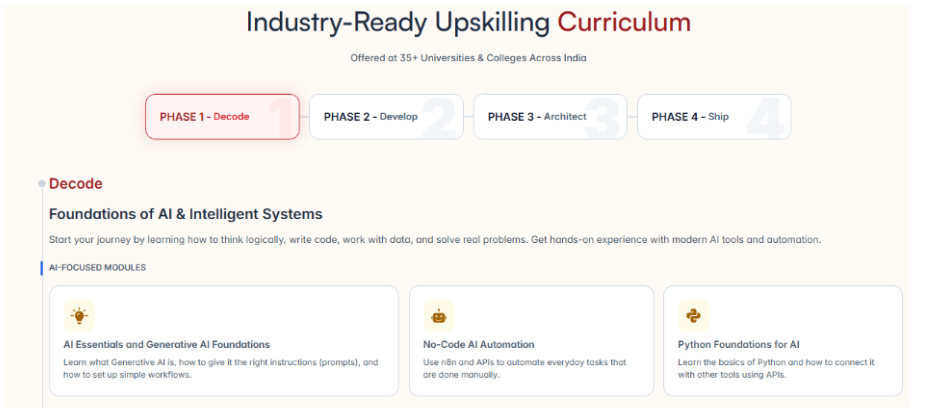
NIAT’s Skill Map draws insights from 3,000+ companies, 10,000+ technology professionals and in-house R&D and product development. Parents should therefore compare the university's academic curriculum and NIAT's learning modules separately rather than assuming that the two are the same course.
3. Ask How Much Practical Learning Is Involved in NIAT
Parents should understand how the child will spend time beyond conventional classroom learning.
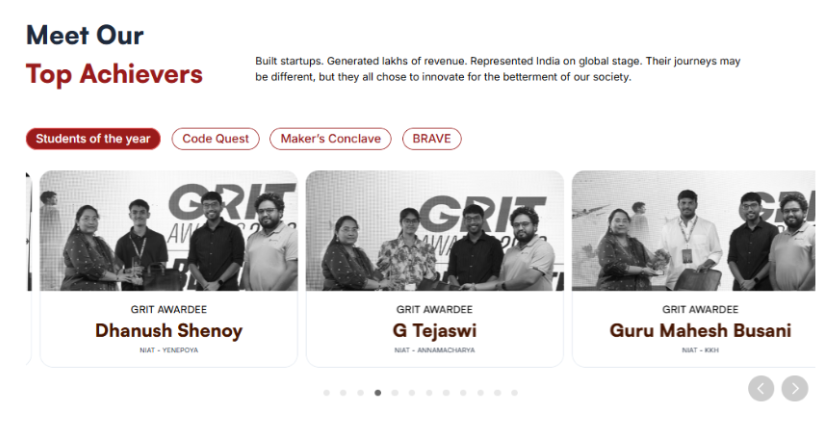
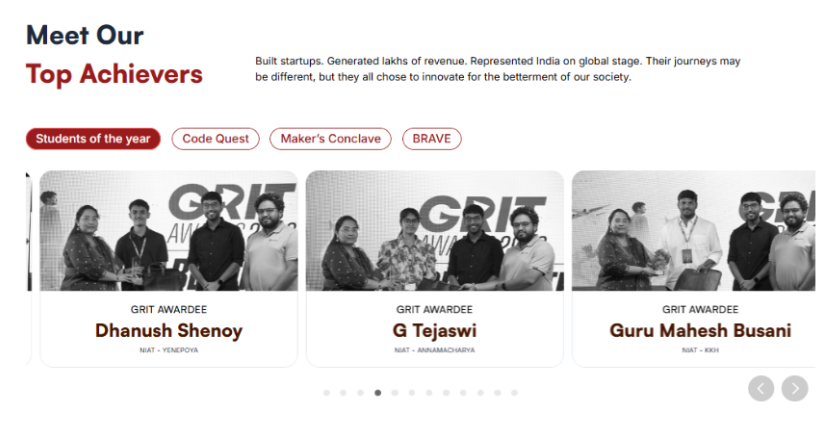
NIAT highlights hands-on projects, student-built applications, hackathons and technology projects as part of its learning approach. Its student-achievement pages also showcase internships, Buildathons and projects developed by students.
4. Understand NAT and the Admission Process
NAT stands for NxtWave Assessment Test. NAT is a 90-minute assessment and is not a university entrance examination. It is used as part of the NIAT upskilling enrollment and counselling process.
After NAT, students will receive 1:1 career counselling and information about collaborating universities. However, the university admission process remains separate and is governed by the university's own eligibility and admission policies. Parents should therefore avoid assuming that clearing NAT guarantees a university seat.
Section | Questions | Time | Marks |
|---|---|---|---|
Psychometric Assessment | 44 | 25 minutes | 44 |
Critical Thinking & Learnability | 20 | 30 minutes | 20 |
Mathematics | 18 | 35 minutes | 36 |
Total | 82 | 90 minutes | 100 |
5. Calculate the Complete Cost
Parents should look at the total cost of the four-year pathway, rather than considering only the NIAT upskilling fee. The calculation should include:
University B.Tech fees
NIAT upskilling fee
Hostel or accommodation
Food and living expenses
Transportation
Other applicable university or student expenses
Parents should also compare this total with other B.Tech options available to the student.The fee may vary from one location to another, but the total fee range is within INR 8 Lakhs - INR 18 Lakhs for the course duration of 4 years.
6. Look at Career Support, Not Just Placement Numbers
Career support is an important consideration, but parents should distinguish between placement support and placement guarantees.
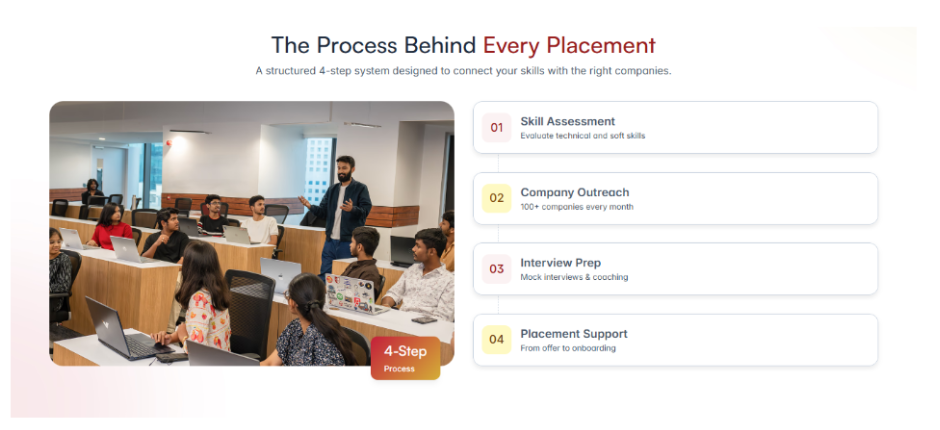
NIAT has a structured placement-support process involving skill assessment, company outreach, interview preparation and placement support. The outcomes depend on students’ effort, skills and performance and that enrollment in NIAT itself does not assure a job or internship. Parents should therefore ask:
What career support is provided?
How are students prepared for interviews?
What internship opportunities are available?
What data is available for the relevant student cohort?
Which companies are coming for NIAT internships and placements?
NIAT has a network that includes 2,500+ companies, ranging from startups to Fortune 500 companies. However, the companies accessible to an individual student can depend on hiring requirements, eligibility, skills, location and other factors.
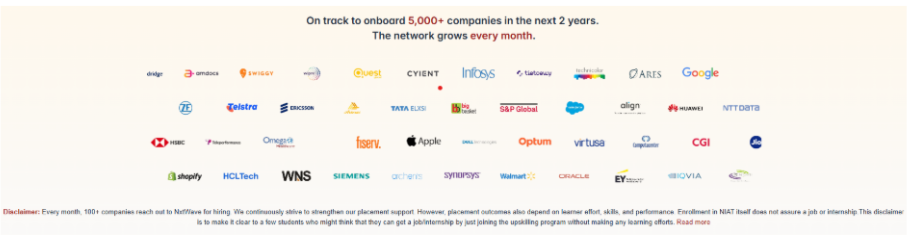
Parents should ask for the latest company list and relevant campus or cohort information rather than assuming that every company in the broader network hires from every campus.
How many students have received internships or jobs?
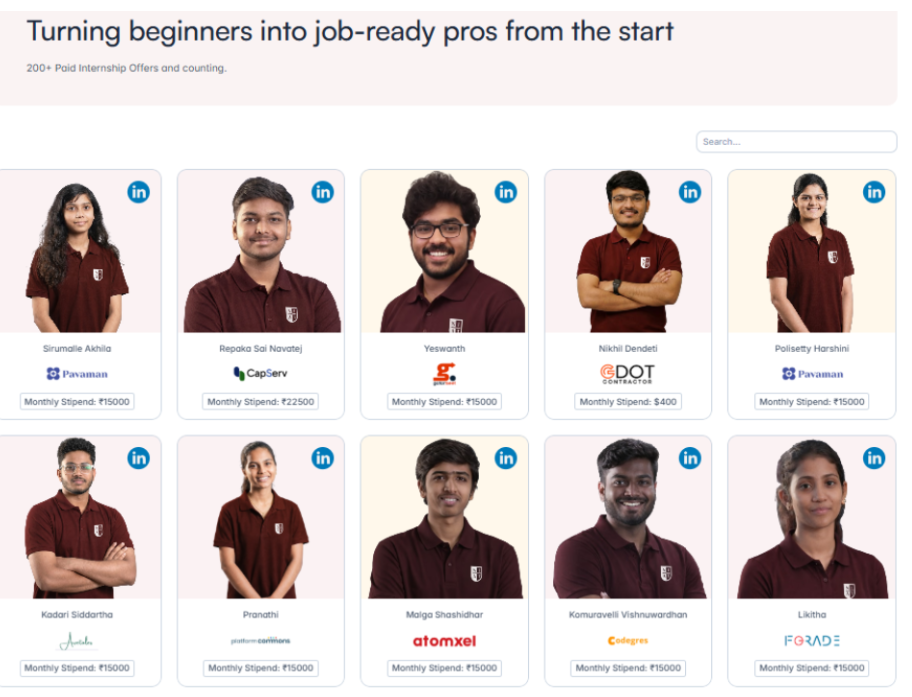
NIAT currently reports 200+ NIATians securing internships with stipends. It also reports 2,500+ companies hiring from NxtWave. However, the official website notes that broader placement figures include learners across multiple NxtWave programs, including online cohorts and placement-support programs.
What is the average and highest package?
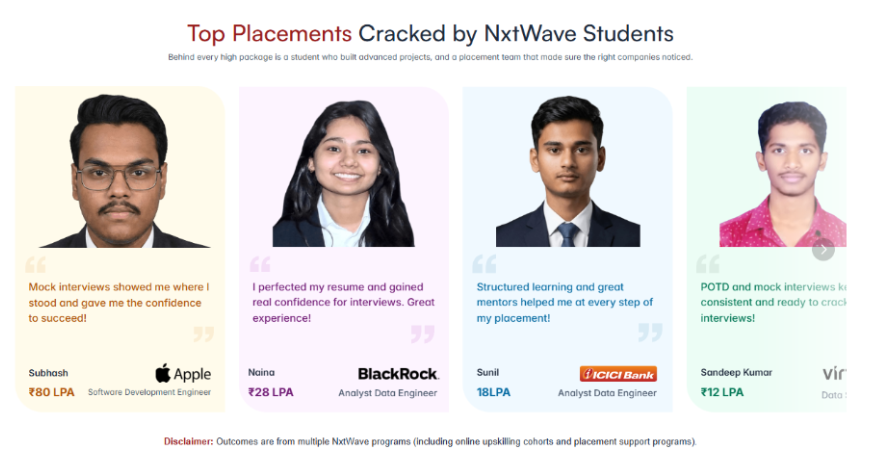
Students have received INR 80 lakh highest CTC across all NxtWave programs, while explicitly stating that the displayed outcomes come from multiple NxtWave programs. NIAT's first batch has not yet completed four years, so final degree-placement outcomes are not yet available for a completed four-year NIAT batch.
From which year can students get internships?
More than 200+ NIATians, in their first year have secured internships with stipends. This indicates that internship opportunities can begin early, but an individual student's internship depends on skills, eligibility, performance and available opportunities.
7. Check Whether the Child Is Suited to the Learning Model
NIAT's model requires students to engage consistently with technology learning and projects. Parents should consider whether the child:
Enjoys coding or technology
Is willing to practise regularly
Likes learning through projects
Is interested in areas such as software, AI or data
Can manage a structured and intensive learning schedule
Is willing to build skills beyond university examinations
A technology-focused program is unlikely to deliver its full value if the student has little interest in technology or is unwilling to participate actively.
8. Check the Specific Collaborating University
NIAT is offered through collaborating universities, so the experience can depend partly on the university selected. Parents should independently verify:
University recognition and regulatory status
B.Tech program and branch
Admission requirements
Total university fees
Campus and hostel facilities
Academic policies
Location
Student support
This comparison is important because NIAT and the collaborating university have different roles in the student's education.
Can parents visit the campus before paying?
A campus visit should be confirmed directly with the relevant collaborating university or NIAT campus team because visit arrangements can vary by location and admission phase. Parents can use a visit to verify:
Classrooms
Labs
Hostel
Library
Sports and student facilities
Training spaces
Transportation
General campus environment
Do NIAT students have separate sections or labs?
This can vary by collaborating universities and programs. Parents should ask the specific campus whether NIAT students have dedicated classrooms, labs, sections or shared university facilities. The university remains responsible for its academic facilities, while NIAT provides its separate upskilling experience.
9. Parents Should Have One Detailed Discussion With the Child
The final decision should involve the student. Parents can discuss three basic questions:
What does the student want to study?: If the student is interested in software, AI, data science or related technology fields, an industry-focused upskilling pathway may be relevant.
How does the student prefer to learn?: A project-heavy and technology-focused model may suit students who enjoy practical learning and continuous skill development.
What does the family expect from the investment?: Parents should have realistic expectations about internships and jobs. A program can provide learning and career support, but the student's skills, projects, consistency and interview performance still matter.
A Parent's Checklist Before Choosing NIAT
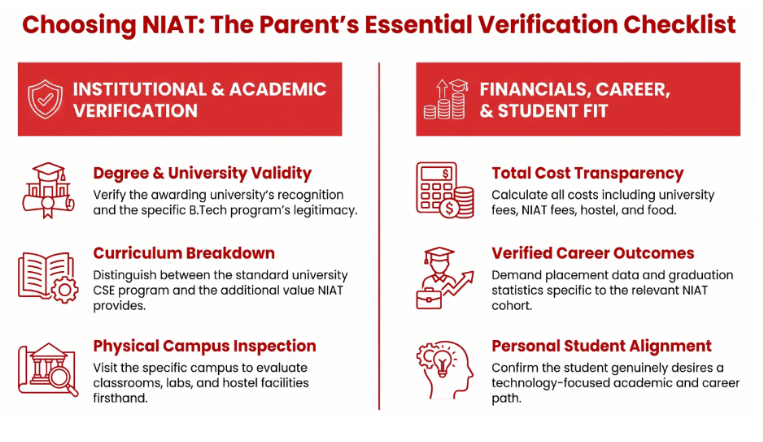
Before choosing NIAT, parents should look beyond the programme’s advertised features and verify how the B.Tech degree, university admission, NIAT upskilling programme and career support fit together. A clear checklist can help families understand the total cost, academic structure, campus facilities, eligibility requirements and expected outcomes before making a decision.
Conclusion
Before sending a child to NIAT, parents should understand that the decision involves two distinct components: the university B.Tech degree and NIAT's complementary upskilling program. The most important checks are the collaborating university, admission requirements, total cost, learning modules, project structure, career support and the child's interest in technology.
NIAT can be considered by families looking for a B.Tech pathway combined with structured, industry-aligned technology upskilling. The decision, however, should be based on the specific university, the student's goals and the complete financial and learning picture, rather than on JEE rank, promotional claims or salary figures alone.
FAQs
1.Who will give the final degree, NIAT or the university?
The collaborating university awards the B.Tech degree. NIAT provides a separate, non-credit upskilling program and its Industry Ready Certificate.
2.If NIAT changes its collaboration later, will the child's degree be affected?
The degree is awarded and academically administered by the university in which the student is enrolled. Parents should obtain the specific terms applicable to their university and enrollment and retain the university admission and fee documents.
3.Can parents visit the campus before paying any fee?
Campus-visit arrangements vary by collaborating university. Parents should contact the specific university or NIAT campus team and confirm whether a visit can be scheduled before making payment.
4.Is the NAT exam fee adjusted in the first-year college fee?
The current NAT registration fee is INR 1,200 and non-refundable. Parents should not assume that it is adjusted against university fees unless the applicable terms specifically provide for it.
5.Is there a minimum cutoff in each section of NAT?
The published information explains the sections, duration and marking scheme but does not establish a universal section-wise cutoff. Parents should confirm the applicable criteria for the relevant admission cycle.
6.After NAT, how long does a student get to confirm enrollment?
The current public information describes the four-step process but does not establish one universal number of days for every admission cycle. Parents should confirm the applicable deadline after counselling.
7.Can NAT marks be used to join another college?
No. NAT is a NxtWave assessment for NIAT's upskilling program and is not a general entrance score for unrelated colleges.
8.Which companies offer internships and placements?
NIAT currently states that its broader hiring network includes 2,500+ companies. Opportunities for an individual student depend on company requirements, eligibility, skills and other factors.
9.How many students have already received internships or jobs?
NIAT currently reports 200+ NIATians securing internships with stipends. Broader hiring figures on the website include learners across multiple NxtWave programs, so parents should request NIAT- and cohort-specific data for a direct comparison.
10.What is the average and highest package?
The current placement page reports an INR 80 LPA highest CTC across all NxtWave programs, not a NIAT-only average or CSE-cohort figure.
11.How will parents receive updates about their child's progress?
NIAT's technology platform describes real-time attendance tracking, instant alerts, learning-journey insights and a daily activity timeline. Parents should also confirm the communication process followed by the specific collaborating university.
12.Can parents contact placed students for verification?
Parents can ask NIAT or the university whether consent-based student or alumni references are available. Direct contact details should not be assumed to be publicly available.
13.Has any NIAT batch passed out?
As NIAT is launched in the year 2023, its first batch is yet to complete in four years. Therefore, parents should distinguish between current internship and early-career outcomes and the final placement outcomes of a completed four-year undergraduate cohort.
14.What happens if the student comes from another state or board?
Students from different states or school boards should check the specific collaborating university's eligibility criteria, since university admission requirements can vary.
Parents should confirm, class 12 eligibility, required subjects, minimum marks, board equivalence requirements, where applicable, documents required for admission, hostel availability, language or regional considerations, transport and relocation arrangements.
NIAT's role is the upskilling component; university admission remains subject to the university's requirements.